

You can spend eight months and $60,000 building a product nobody asked for, or you can spend two weekends and $200 discovering that the thing you were about to build was the wrong thing. I've done both. The second one hurt less.
That gap — between what founders assume customers need and what customers actually do — is where most startups quietly die. Building a minimum viable product is the cheapest way to find out which side of that gap you're on, before your runway makes the decision for you.
Key takeaways
- An MVP is a test, not a smaller product. If nobody can act on what you ship, you've built a demo, not an MVP.
- Define one measurable success criterion before you start. Yes, one. Not a dashboard with eleven metrics.
- Most MVPs cost between nothing and $15,000. Anything above that should make you suspicious of your own scope.
- Concierge and no-code versions beat custom development in the vast majority of early validation cases.
- Kill your MVP fast if the signal is bad. Sunk cost is the second-most expensive thing after a bad hire.
How do startups actually build an MVP without burning their runway?
The honest answer: most of them skip the building part at first. They test whether the problem exists, then whether anyone will pay to make it go away, and only then do they write code.
When I ran a small B2B tool for field technicians, my first "MVP" was a shared spreadsheet, a WhatsApp group, and me calling each technician personally every morning to ask if the job was done. It held 14 users for three weeks. Total cost: my phone bill. That's an MVP in the strictest sense — the smallest thing that generates a real signal about real behaviour.
The four-step sequence that usually works
- Interview 10-15 people in your target segment. Not to pitch them. To understand what they currently do about the problem you think they have.
- Write down your riskiest assumption. It's almost never "can we build it." It's "will they switch from their current workaround."
- Ship the smallest artifact that tests that assumption. Landing page, clickable prototype, concierge service, no-code app — pick the cheapest sufficient one.
- Set a success threshold in advance. "If fewer than 3 of the 15 people I demo this to ask to use it next week, I stop." Write it down. Honour it.
Spoiler alert: step four is the one everyone skips, and it's the only one that protects you from yourself.
What are the main types of minimum viable product?
Four variants cover almost every early-stage case, and they differ mainly in cost and how much behavioural data they produce.
| Type | Typical cost | Best for testing | Main weakness |
|---|---|---|---|
| Landing page + waitlist | $0–$150 | Interest and message-market fit | Intent ≠ willingness to pay |
| Clickable prototype | $300–$2,500 | Flow comprehension, usability | Nothing gets used for real |
| Concierge / manual service | $0–$1,000 | Whether the problem actually hurts | Doesn't scale past ~20 users |
| No-code app | $500–$8,000 | Retention and repeat usage | Breaks under real volume |
Custom development from day one sits outside this table on purpose. It's rarely an MVP. It's a bet that you already know the answer.
What is the minimum viable product in a startup, exactly?
The word doing all the work in that phrase is viable. Minimum gets all the attention — founders love stripping features — but viable is the constraint that actually matters. Your MVP has to be complete enough that a real person can get real value from it without you standing next to them explaining the workaround.
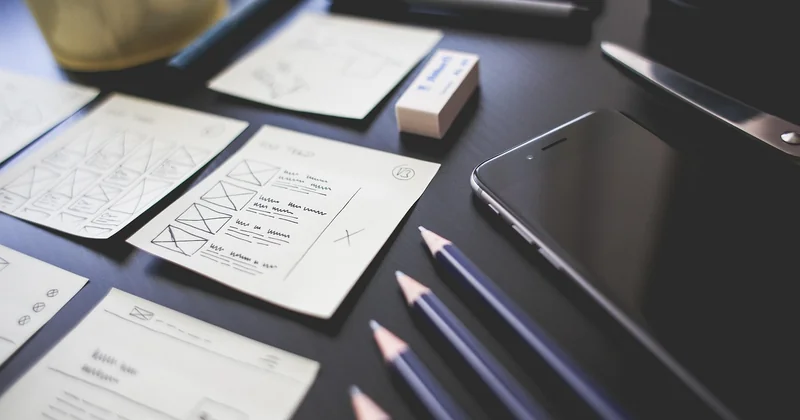
If you have to be in the room for it to make sense, you've built a prototype. Useful for learning, useless as a product.
Minimum viable product vs prototype: what's the difference?
A prototype exists to answer "can this be built and understood?" An MVP exists to answer "will people change their behaviour and pay for this?" Different questions, different artifacts, different budgets. Confusing the two is how teams end up demoing a beautiful Figma file to investors while having zero evidence anyone wants the thing.
In my opinion — and I'll defend this — a prototype is not an MVP until someone outside your team uses it unsupervised and comes back for a second session. The repeat visit is the entire ballgame. First use is curiosity. Second use is habit forming.
How to create a minimum viable product, step by step
Here's the sequence I use now, after getting it wrong enough times to have opinions.

Narrow to one user and one job
Not "small businesses." A specific kind of person doing a specific job at a specific moment. When I built the field-technician tool, narrowing to "independent plumbers doing 4-8 jobs a week" changed everything. The broader version, "tradespeople," had given me mush.
Map the current workaround
Whatever your users do today is your real competitor. If they're using a spreadsheet and it's "fine," you need a reason stronger than "our UI is nicer." Ask what breaks in their current process, and how often.
Build the narrowest thing that delivers the core value
One job, done reliably. That's the scope. I once stripped an onboarding flow from nine steps to two and activation went from roughly a quarter of new users to just over half. The features we cut weren't the product; they were decoration.
How much does it cost to build an MVP?
Real talk: somewhere between a few hundred dollars and $15,000 for the overwhelming majority of early-stage cases. Anything quoted beyond that usually means you're being sold a full product with an MVP label stuck on it.

- Landing page validation: a domain, a builder subscription, maybe $100 in ads. Under $200.
- Concierge MVP: your time, a spreadsheet, a scheduling tool. Nearly free, and the highest-signal option available to a solo founder.
- No-code build: $500–$8,000 depending on complexity and whether you hire someone for two weeks or do it yourself.
- Agency or outsourced dev: $10,000–$40,000. Sometimes justified for regulated industries. Rarely justified before you have ten paying users.
And the cost you'll never see on the invoice: the four months you spent building instead of talking to customers. That's the expensive part.
The mistakes that quietly kill MVPs
Feature creep is the famous one, but it's not the deadliest. The deadliest is building an MVP that's viable but not testable — no instrumentation, no threshold, no decision attached to it.
The second deadliest: treating "minimum" as "embarrassing." Users forgive ugly. They do not forgive broken. If your core action doesn't work reliably, nothing else you learn matters.
And the third, which I've committed: asking leading questions during validation. "Wouldn't it be useful if…" is a machine for producing polite lies. Ask what they did last Tuesday instead.
When should you stop iterating and commit?
When a cohort of users you didn't hand-hold comes back on their own, and roughly a third of them are still active a month later. That's not a scientific threshold. It's the one that has held up across every project I've shipped, and it beats waiting for certainty you'll never get.
The uncomfortable truth is that most MVPs should die. The point of building small is to make that death cheap enough that you can afford to try again — twice more, in the time it would have taken you to build one elaborate thing.
So the real question isn't whether your MVP is good enough. It's whether you've made it cheap enough to be wrong.


